
Keeping the page colour consistent – Is it as important to the user as it is to us?
The coloured paper story
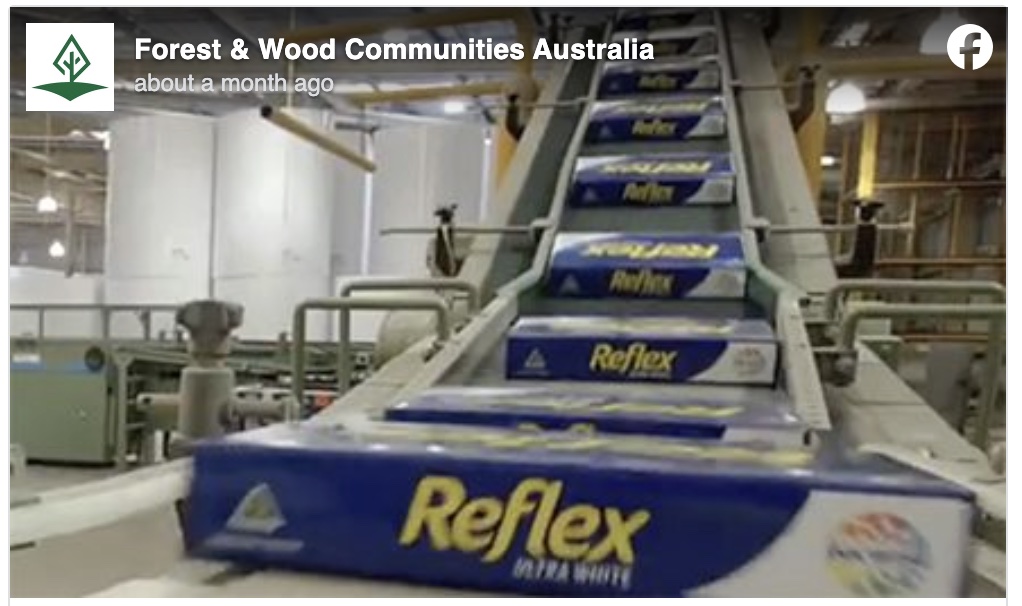
As you know, we construct all our coloured exercise books in house, so that we are able to keep the page colours and lines etc consistent. Up till now, we have been using REFLEX papers, which were manufactured in the Maryvale Mill in Victoria. This top quality paper is getting harder to find:
The REFLEX paper story:
Facebook Post Jan 12 2026
Reflex paper still in Australia but now made in Thailand
The gleaming blue colour is familiar, and the yellow lettering confirms the initial perception: Reflex copy paper is still available to buy in Australia. But turning over the package reveals the truth: ‘Made in Thailand’. Source: Philip Hopkins, Latrobe Valley Express
Reflex copy paper, launched in 1975 by Australian Paper, has not been produced at Opal’s Maryvale Mill since January 2023, when the state government closed the native forest industry and no pulpwood was available to produce the white copy paper. More than 350 workers directly lost their jobs.
Following the closure of Opal’s white paper production, a company, Double A, bought the Reflex copy paper brand from Opal, which is part of Nippon Paper Group. Headquartered in Thailand, Double A is a leading global paper supplier with significant market share in Europe and the Middle East and Australia.
“With Reflex remaining an iconic brand for consumers throughout Australia and New Zealand, this addition to our offer reinforces the strength of our unique proposition to the Australian and New Zealand markets,” Tim Irvine, Double A’s senior channel development manager – A/NZ, said at the time.
“Our Double A premium brand, complemented by Reflex, will provide customers with a highly recognised, complete, well-supported, branded product offering,” he said.
Mr Irvine said when Reflex was relaunched, distribution was regained from scratch, step-by-step.
Opal has taken legal action against the Victorian government over the 2023 axing of a wood supply contract which was supposed to run to 2030.
In filings lodged in the Supreme Court of Victoria, Paper Australia Pty Ltd (trading as ‘Opal’) began proceedings against the Victorian state government for $402 million in damages following the government’s breach of the Wood Pulp Agreement (Agreement) to provide a stable supply of wood to Opal.
The Maryvale Mill, a cornerstone of the Latrobe Valley for more than 85 years, then employed more than 500 people on the site directly, with additional jobs created externally in the wider community and supply chain. Its direct economic output generated an estimated contribution to the Latrobe Local Government Area of more than $622 million annually.
In May 1996, the Victorian government entered into the agreement with Amcor, the then operator of the Maryvale Mill, to supply pulpwood, with the agreement expiring in June 2030. In 1998, Amcor assigned its rights under the agreement to Paper Australia Pty Ltd (now trading as Opal).
Under the agreement, the Victorian government’s state-owned enterprise VicForests was providing Opal with eucalypt wood, a critical raw material for white paper production. In November 2022, the government advised Opal it would be unable to fulfil its contractual obligations to supply wood.
For the 2022/23 financial year, a reduced supply of wood was supplied to Opal by VicForests and subsequently, the state government made it clear that it did not intend to supply any wood to Opal in the future, forcing Opal to terminate the agreement in May 2023.
In May 2023, then Premier Daniel Andrews put an end to native harvesting seven years ahead of the previously signalled 2030 phase-out.
Opal says that with no viable alternatives available to replace the discontinued wood supply, it was forced to close its white pulp and paper production at the Maryvale Mill in early 2023, resulting in the loss of more than 400 jobs across Australia.
The closure, together with the reduction in production volumes, consequential redundancies, and the severe commercial impacts on the entire Opal Group arising from the loss of its white pulp and paper business, has caused, and continues to cause, Opal to suffer substantial loss and damage.
Luckily we stocked up on paper, when we heard the mill was closing and we have enough for at least this year. We understand the stress that can be caused by differences in tints, so we are testing several other brands for the closest matching colours, in preparation for when we run out.
This is what sets us apart from the cheaper sites – we try to remain consistent in our production of coloured page books, so that you can be confident they will always be the best for you.
Comments
Comments are closed.